
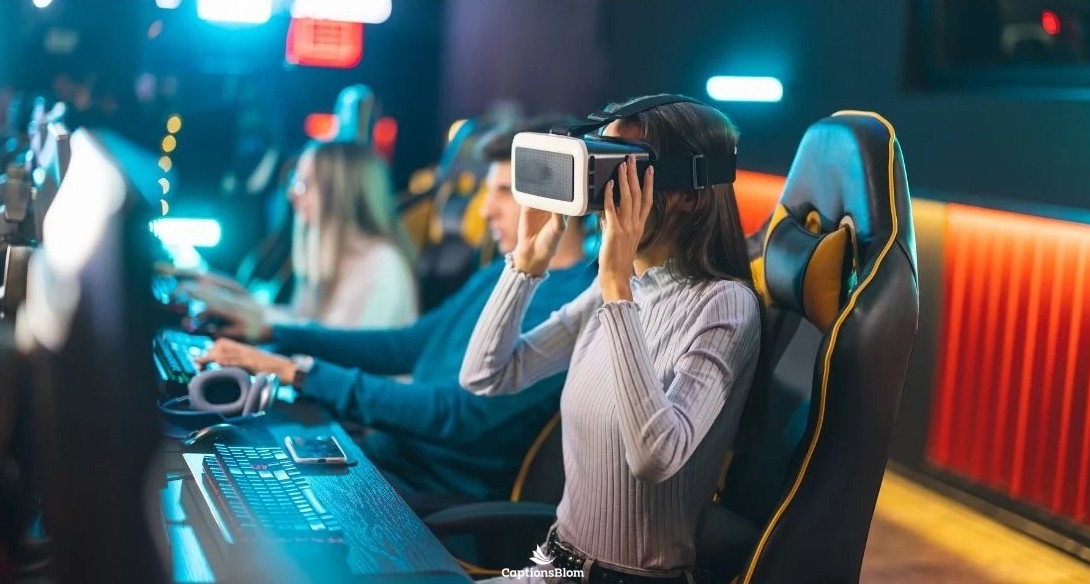
The digital world has transformed the way we live, work, and interact. At the forefront of this transformation is online hoki22.com , which has evolved from simple leisure activities to immersive, interactive experiences that are increasingly setting the stage for future digital realities. As technology advances, the boundaries between the real world and digital environments continue to blur, and online games are leading the charge in this revolution.
Online gaming is not just about entertainment anymore; it’s creating new opportunities for social interaction, education, business, and even virtual economies. With the integration of virtual reality (VR), augmented reality (AR), and artificial intelligence (AI), online gaming is becoming the foundation for the digital realities of tomorrow. In this article, we explore how online gaming is shaping the future of digital worlds and why it’s more than just a pastime—it’s a stepping stone to the digital realities of the future.
1. Immersive Digital Worlds
The Rise of VR and AR
One of the most exciting aspects of online gaming today is the increasing use of virtual reality (VR) and augmented reality (AR). These technologies are transforming how we experience games, making the virtual world feel more like the real world. Online games are becoming more immersive, offering experiences that go beyond the screen, creating fully interactive, 360-degree environments where players can move and act in real time.
Games like Beat Saber (VR) and Pokémon GO (AR) are perfect examples of how VR and AR are enhancing the gaming experience. These technologies encourage players to physically engage with their environment, moving their bodies and interacting with digital elements that overlay the real world. As VR and AR technology continue to improve, games will become even more lifelike, paving the way for a fully immersive digital experience that mimics real life.
Why It Wins:
- VR and AR bring gaming to life, turning virtual worlds into tangible, interactive environments.
- Immersive gameplay encourages physical interaction, making the experience more engaging and realistic.
- These technologies are foundational in developing digital realities, pushing the limits of what is possible in gaming.
2. Socialization and Connectivity
Virtual Communities
Online gaming has long been a hub for social interaction, and this trend is only intensifying. In today’s games, players interact not only with NPCs (non-playable characters) but with other real players from around the world. Games like Fortnite, World of Warcraft, and Minecraft have become more than just games—they are virtual communities where people connect, collaborate, and socialize.
In these digital spaces, players build relationships, join clans, and engage in real-time conversations, creating dynamic social environments that blur the lines between physical and digital spaces. These social dynamics are integral to the development of future digital realities, where socializing and working in virtual environments will become the norm. Just as social media reshaped communication, online gaming is evolving into a primary way people socialize in virtual spaces.
Why It Wins:
- Online games provide a platform for social interaction, fostering global communities.
- Multiplayer functionality allows players to collaborate, compete, and connect in new ways.
- As digital communities grow, virtual social spaces will play a crucial role in the future of digital realities.
3. Virtual Economies
The Digital Marketplace
Online gaming is not only reshaping how we interact socially, but it’s also introducing new economic models. Many online games have integrated virtual economies where players can buy, sell, and trade digital goods. World of Warcraft, for example, has a sophisticated in-game economy where players use in-game currency to buy weapons, armor, and other resources. In Fortnite, players can purchase skins, emotes, and battle passes to enhance their gaming experience.
These digital economies are laying the groundwork for future digital marketplaces where virtual goods have real-world value. With the rise of blockchain and NFTs (non-fungible tokens), the concept of digital ownership is becoming more prominent. Players will be able to buy, sell, and trade virtual assets across different platforms, further integrating gaming with real-world economies.
Why It Wins:
- Virtual economies create a new way for players to interact with digital goods and services.
- Online gaming introduces new revenue models that go beyond traditional gameplay.
- The rise of blockchain technology and NFTs will further blur the lines between virtual and real-world economies.
4. AI-Powered Gaming
Smarter, More Engaging Gameplay
Artificial intelligence (AI) is rapidly changing the way online games are designed and played. AI enables more dynamic, personalized gameplay experiences by adapting to a player’s behavior and preferences. Games like Red Dead Redemption 2 and The Last of Us Part II use AI to create responsive NPCs that react intelligently to player actions, creating a more immersive and lifelike world.
As AI continues to evolve, we can expect more games that offer adaptive environments and non-player characters that learn and evolve with the player. AI-driven characters and environments will become more prevalent in virtual worlds, making them feel alive and reactive in real time. This level of interactivity is critical for building future digital realities, where AI will play a central role in creating rich, personalized experiences.
Why It Wins:
- AI enables more immersive, responsive, and dynamic gaming experiences.
- Personalization through AI will make games feel more tailored to individual players.
- The integration of AI into virtual worlds will be foundational for creating intelligent, evolving digital realities.
5. Esports and Virtual Competitions
The Evolution of Competitive Gaming
Esports has seen an explosion in popularity in recent years, with competitive gaming becoming a multi-billion-dollar industry. Online games like League of Legends, Dota 2, and Overwatch have become platforms for professional gaming, with large-scale tournaments and sponsorships driving the competitive scene. Esports events attract millions of viewers, with professional players becoming celebrities in their own right.
As online gaming continues to grow, so will the opportunities for virtual competitions. In the future, we could see esports tournaments that are fully immersive, where spectators and players alike participate in virtual stadiums and digital environments. This will elevate online gaming beyond just a sport, positioning it as a key component of future digital entertainment.
Why It Wins:
- Esports has established itself as a professional industry, with a massive following and significant revenue.
- Virtual competitions will grow in scale, offering immersive spectator experiences.
- Competitive gaming in digital worlds is a precursor to future virtual sports and entertainment experiences.
6. Digital Workspaces and Education
Gamified Learning and Virtual Offices
One of the more intriguing possibilities that online gaming presents is the integration of gaming elements into work and education. Gamification has already started to play a role in educational settings, with games like Duolingo using game mechanics to teach languages. As online games continue to evolve, we may see more advanced uses of gamified learning, where education becomes a more interactive and immersive experience.
Similarly, the concept of virtual workspaces is gaining traction. Games that simulate environments for work, like Second Life or VRChat, allow people to create virtual offices and attend meetings in digital spaces. As VR and AR technology improve, these digital workspaces could become the norm for remote work, offering immersive, collaborative environments that make digital interaction feel as real as in-person communication.
Why It Wins:
- Online games are laying the foundation for gamified education and digital learning environments.
- Virtual workspaces will become increasingly common as more people shift to remote work.
- Gamified learning and interactive education will drive future digital experiences, making learning more engaging and accessible.
Conclusion: Shaping the Digital Future
Online rolet is no longer just a hobby—it’s a powerful catalyst for the future of digital realities. With its ability to combine immersive environments, social connectivity, virtual economies, AI, and esports, gaming is paving the way for a future where digital worlds are as engaging and complex as the physical world. As technology continues to evolve, online gaming will continue to serve as a testing ground for the innovations that will shape our digital futures.
From virtual reality to AI-driven narratives, online gaming is transforming entertainment, education, work, and social interaction. The next generation of digital realities will be built on the foundation that online gaming has laid, creating a world where gaming and daily life seamlessly intersect. Whether for entertainment, career, or education, online gaming is not just shaping the future—it’s leading the way into new and exciting digital realities.
