
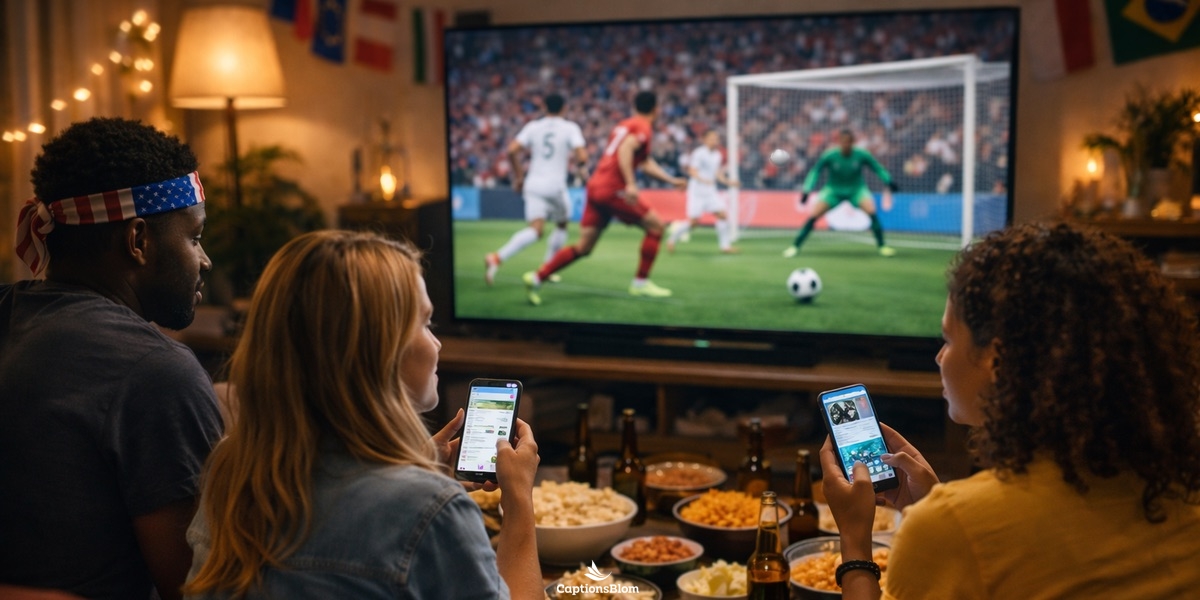
The 2026 World Cup introduces a viewing environment where following a single match is no longer the default. With overlapping fixtures and constant action, many fans turn to multi-screen setups to keep up. This shift changes not just how much football is consumed, but how it is understood, especially for those trying to read tactical patterns in real time.
Why Multi-Screen Viewing Changes Match Understanding
Watching multiple matches simultaneously fragments attention, making it harder to follow continuous sequences within a single game. Tactical structures—such as buildup patterns or pressing triggers—often develop over several phases, which can be missed when switching screens.
As a result, viewers may rely more on visible events like shots or goals, rather than the processes that lead to them. This creates a gap between what is seen and what is actually happening tactically.
What You Gain From Watching Multiple Matches
Despite its challenges, multi-screen viewing offers a broader perspective. It allows viewers to compare teams in real time, identifying differences in tempo, spacing, and decision-making across matches.
This comparative advantage helps highlight contrasts that might not be obvious when watching games in isolation. A high-pressing system in one match becomes more meaningful when immediately contrasted with a deeper defensive setup in another.
How to Structure Your Multi-Screen Setup
To avoid overload, multi-screen viewing requires intentional structure rather than constant switching. Each screen should serve a specific purpose within your overall viewing strategy.
A practical approach includes:
- Assign one primary match for full attention and continuous tracking.
- Use secondary screens for monitoring key moments or tactical shifts.
- Focus audio on the primary match to maintain immersion.
- Check secondary matches during stoppages or slower phases.
- Rotate primary focus only when a match loses tactical clarity.
This structure reduces cognitive strain while preserving depth of analysis. Instead of dividing attention equally, viewers prioritize understanding in one match while maintaining awareness of others.
Over time, this approach improves the ability to recognize patterns quickly, even with limited exposure to each game.
The Risk of Missing Tactical Context
Switching between matches often leads to incomplete narratives. A goal may appear sudden, but its buildup—such as repeated overloads on one side—might have been developing for several minutes.
Why Context Matters More Than Moments
Without context, viewers may misinterpret performance. A team conceding multiple chances might seem disorganized, when in reality it is being stretched by a well-executed tactical plan.
For multi-screen viewers, the challenge is to reconnect events with their causes. This requires focusing on patterns rather than isolated highlights, even when attention is divided.
Watching Live to Build Pattern Recognition
Following matches in real time remains essential for understanding how tactical ideas unfold. When you watch ดูบอลสด, you can observe how teams adjust their positioning across phases, how pressing intensity fluctuates, and how chance quality evolves throughout the game. These details help explain differences between expected goals and actual outcomes, especially when comparing matches side by side.
This live perspective strengthens pattern recognition. Over multiple games, viewers begin to identify recurring structures and anticipate how teams will behave in similar situations.
Comparing Matches to Sharpen Tactical Awareness
Multi-screen setups naturally encourage comparison, which can be structured for deeper insight:
| Match Scenario | Tactical Feature | What to Watch For |
| High-tempo game | Pressing intensity | Frequency of turnovers in advanced areas |
| Controlled buildup | Positional play | Spacing between midfield and defensive lines |
| Transition-focused | Counter-attacks | Speed of vertical progression |
These comparisons allow viewers to categorize matches quickly. Recognizing these patterns helps in deciding where to focus attention at any given moment.
When Multi-Screen Viewing Becomes Counterproductive
There is a threshold where additional screens reduce rather than enhance understanding. When attention becomes too divided, even major tactical shifts can go unnoticed.
This often happens during complex matches where both teams adjust frequently. In such cases, committing to a single screen provides a clearer and more accurate reading of the game.
How to Adapt Focus During Key Moments
Effective multi-screen viewing depends on recognizing when to concentrate fully on one match. Key triggers include tactical substitutions, sudden shifts in tempo, or changes in formation.
By narrowing focus during these moments, viewers capture critical transitions that define match outcomes. This balance between breadth and depth is what turns multi-screen viewing into a skill rather than a distraction.
Summary
Multi-screen viewing reflects the demands of a larger, faster-paced World Cup, but it requires structured attention to remain effective. By prioritizing one match, using others for comparison, and focusing on tactical patterns rather than isolated moments, viewers can turn fragmented viewing into a deeper, more informed ดูบอลสดออนไลน์มือถือ โกลแดดดี้ experience.
